Introduction

Within Asian and Hindu literature like the literature of other cultures, we often find the values, morality, and principles of proper or right human conduct values by such cultures. From the writings of Confucius to the Noh plays to the epic Ramayana, we see such principles illustrated as a means of helping human beings live a harmonious, peaceful, and moral life.

As a whole Asian literature is a compact of ideas wherein culture, belief,religion, and values collide. This can be reflected from the different writers or authors all over Asia who wants to share thier views, ides, emotion through different literary pieces.

However, this may not be enough to serve as your reference yet this could probabaly help you to get a hint on what to do and what to read.

Compilations and Manuals

Sunday, March 20, 2011


In the late 9th century Ibn al-Nadim, a Baghdadi bookseller, compiled a crucial work in the study of Arabic literature. Kitab al-Fihrist is a catalogue of all books available for sale in Baghdad and it gives a fascinating overview of the state of the literature at that time.
One of the most common forms of literature during the Abbasid period was the compilation. These were collections of facts, ideas, instructive stories and poems on a single topic and covers subjects as diverse as house and garden, women, gate-crashers, blind people, envy, animals and misers. These last three compilations were written by al-Jahiz the acknowledged master of the form. These collections were important for any nadim, a companion to a ruler or noble whose role was often involved regaling the ruler with stories and information to entertain or advise.


A type of work closely allied to the collection was the manual in which writers like ibn Qutaybah offered instruction in subjects like etiquette, how to rule, how to be a bureaucrat and even how to write. Ibn Qutaybah also wrote one of the earliest histories of the Arabs, drawing together biblical stories, Arabic folk tales and more historical events.


The subject of sex was frequently investigated in Arabic literature. The ghazal or love poem had a long history being at times tender and chaste and at other times rather explicit. In the Sufi tradition the love poem would take on a wider, mystical and religious importance. Sex manuals were also written such as The Perfumed Garden, Ṭawq al-Ḥamāmah or The Dove's Neckring by ibn Hazm and Nuzhat al-albab fi-ma la yujad fi kitab or Delight of Hearts Concerning What will Never Be Found in a Book by Ahmad al-Tifashi. Countering such works are one like Rawdat al-muhibbin wa-nuzhat al-mushtaqin or Meadow of Lovers and Diversion of the Infatuated by ibn Qayyim al-Jawziyyah who advises on how to separate love and lust and avoid sin.
Philippine Literature

Sunday, March 13, 2011

Module no. 10: Philippine Literature
Posted by: Beverly Abelon
Source: http://www.seasite.niu.edu/Tagalog/Literature/Short%20Stories/Wedding%20Dance.htmhttp://www.buzzle.com/articles/history-of-philippine-literature.html
________________________________________________________________
Introduction:


Philippine literature had evolved much before colonization. It is full of legends and tales of colonial legacy. Mexican and Spanish dominance over the land and the people, over varying periods of time, witnessed the incorporation of English, Spanish, Filipino and native languages, to express ideology and opinion. Literature in the Philippines developed much later than in most other countries. Evidence reveals the use of a script called Baybayin that flourished in 1521. Baybayin was used to write about legends, in Luzon, during Spaniard domination. 


The literature of the Philippines is predominantly a reflection of the influence of the Spaniards on the indigenous culture and traditions. The people of Manila and native groups within the Philippines used to write on bamboo and the arecaceae palm. They used knives for inscribing the ancient Tagalog script. The literature thus preserved was limited to the seventeen basic symbols of the language. With just three vowels and consonantal symbols that had predetermined, inherent sound, the literature handed down was in a 'raw' state and needed to be developed. 


Many of the world's best short stories are native to the Philippines. When the Filipino writers began using the English language for artistic expression, they took the original works of the Philippines to the west. The folk tales and epics were, in time, put into written word along with poems and chants that were the legacies of the ethnolinguistic groups. Literary work now available includes articles on Spanish conquest, native cultural heritage, pre-colonial literature and traditional narratives. Another very interesting segment of Philippine literature includes inspiring speeches and songs. This segment has effectively maintained the mystifying characteristic of Philippine epics and folk tales. The narratives and descriptions of various magical characters, mythical objects and supernatural are surreal, distinctly adhering to the ideologies and customs of the natives. 


Ethno-epics such as Biag ni Lam-ang or the Life of Lam-ang, Agyu or Olahing, Sandayo of Subanon, Aliguyon, the Hudhud and Labaw Donggon are great examples of assimilated styles and language variations. Today, Philippine literature reflects national issues through political prose, essay writing and novels. Novels by Jose Rizal, El Filibusterismo and Noli Me Tangere patronize the revival of the rich folk traditions.


Wedding Dance


 Amador Daguio


Awiyao reached for the upper horizontal log which served as the edge of the headhigh threshold.  Clinging to the log, he lifted himself with one bound that carried him across to the narrow door. He slid back the cover, stepped inside, then pushed the cover back in place. After some moments during which he seemed to wait, he talked to the listening darkness.


"I'm sorry this had to be done. I am really sorry. But neither of us can help it."


The sound of the gangsas beat through the walls of the dark house like muffled roars of falling waters. The woman who had moved with a start when the sliding door opened had been hearing the gangsas for she did not know how long. There was a sudden rush of fire in her. She gave no sign that she heard Awiyao, but continued to sit unmoving in the darkness.


But Awiyao knew that she heard him and his heart pitied her. He crawled on all fours to the middle of the room; he knew exactly where the stove was. With bare fingers he stirred the covered smoldering embers, and blew into the stove. When the coals began to glow, Awiyao put pieces of pine on them, then full round logs as his arms. The room brightened.


"Why don't you go out," he said, "and join the dancing women?" He felt a pang inside him, because what he said was really not the right thing to say and because the woman did not stir. "You should join the dancers," he said, "as if--as if nothing had happened." He looked at the woman huddled in a corner of the room, leaning against the wall. The stove fire played with strange moving shadows and lights
upon her face. She was partly sullen, but her sullenness was not because of anger or hate.


"Go out--go out and dance. If you really don't hate me for this separation, go out and dance. One of the men will see you dance well; he will like your dancing, he will marry you. Who knows but that, with him, you will be luckier than you were with me."


"I don't want any man," she said sharply. "I don't want any other man."


He felt relieved that at least she talked: "You know very well that I won't want any other woman either. You know that, don't you? Lumnay, you know it, don't you?"


She did not answer him.


"You know it Lumnay, don't you?" he repeated.


"Yes, I know," she said weakly.


"It is not my fault," he said, feeling relieved. "You cannot blame me; I have been a good husband to you."


"Neither can you blame me," she said. She seemed about to cry.


"No, you have been very good to me. You have been a good wife. I have nothing to say against you." He set some of the burning wood in place. "It's only that a man must have a child. Seven harvests is just too long to wait. Yes, we have waited too long. We should have another chance before it is too late for both of us."


This time the woman stirred, stretched her right leg out and bent her left leg in. She wound the blanket more snugly around herself.


"You know that I have done my best," she said. "I have prayed to Kabunyan much. I have sacrificed many chickens in my prayers."


"Yes, I know."


"You remember how angry you were once when you came home from your work in the terrace because I butchered one of our pigs without your permission? I did it to appease Kabunyan, because, like you, I wanted to have a child. But what could I do?"


"Kabunyan does not see fit for us to have a child," he said. He stirred the fire. The spark rose through the crackles of the flames. The smoke and soot went up the ceiling.


Lumnay looked down and unconsciously started to pull at the rattan that kept the split bamboo flooring in place. She tugged at the rattan flooring. Each time she did this the split bamboo went up and came down with a slight rattle. The gong of the dancers clamorously called in her care through the walls.


Awiyao went to the corner where Lumnay sat, paused before her, looked at her bronzed and sturdy face, then turned to where the jars of water stood piled one over the other. Awiyao took a coconut cup and dipped it in the top jar and drank. Lumnay had filled the jars from the mountain creek early that evening.


"I came home," he said. "Because I did not find you among the dancers. Of course, I am not forcing you to come, if you don't want to join my wedding ceremony. I came to tell you that Madulimay, although I am marrying her, can never become as good as you are. She is not as strong in planting beans, not as fast in cleaning water jars, not as good keeping a house clean. You are one of the best wives in the
whole village."


"That has not done me any good, has it?" She said. She looked at him lovingly. She almost seemed to smile.


He put the coconut cup aside on the floor and came closer to her. He held her face between his hands and looked longingly at her beauty. But her eyes looked away. Never again would he hold her face.  The next day she would not be his any more. She would go back to her parents. He let go of her face, and she bent to the floor again and looked at her fingers as they tugged softly at the split bamboo floor.


"This house is yours," he said. "I built it for you. Make it your own, live in it as long as you wish. I will build another house for Madulimay."


"I have no need for a house," she said slowly. "I'll go to my own house. My parents are old. They will need help in the planting of the beans, in the pounding of the rice."


"I will give you the field that I dug out of the mountains during the first year of our marriage," he said. "You know I did it for you. You helped me to make it for the two of us."


"I have no use for any field," she said.


He looked at her, then turned away, and became silent. They were silent for a time.


"Go back to the dance," she said finally. "It is not right for you to be here. They will wonder where you are, and Madulimay will not feel good. Go back to the dance."


"I would feel better if you could come, and dance---for the last time. The gangsas are playing."


"You know that I cannot."


"Lumnay," he said tenderly. "Lumnay, if I did this it is because of my need for a child. You know that life is not worth living without a child. The man have mocked me behind my back. You know that."


"I know it," he said. "I will pray that Kabunyan will bless you and Madulimay."


She bit her lips now, then shook her head wildly, and sobbed.


She thought of the seven harvests that had passed, the high hopes they had in the beginning of their new life, the day he took her away from her parents across the roaring river, on the other side of the mountain, the trip up the trail which they had to climb, the steep canyon which they had to cross. The waters boiled in her mind in forms of white and jade and roaring silver; the waters tolled and growled,
resounded in thunderous echoes through the walls of the stiff cliffs; they were far away now from somewhere on the tops of the other ranges, and they had looked carefully at the buttresses of rocks they had to step on---a slip would have meant death.


They both drank of the water then rested on the other bank before they made the final climb to the other side of the mountain.


She looked at his face with the fire playing upon his features---hard and strong, and kind. He had a sense of lightness in his way of saying things which often made her and the village people laugh. How proud she had been of his humor. The muscles where taut and firm, bronze and compact in their hold upon his skull---how frank his bright eyes were. She looked at his body the carved out of the mountains
five fields for her; his wide and supple torso heaved as if a slab of shining lumber were heaving; his arms and legs flowed down in fluent muscles--he was strong and for that she had lost him.


She flung herself upon his knees and clung to them. "Awiyao, Awiyao, my husband," she cried. "I did everything to have a child," she said passionately in a hoarse whisper. "Look at me," she cried. "Look at my body. Then it was full of promise. It could dance; it could work fast in the fields; it could climb the mountains fast. Even now it is firm, full. But, Awiyao, I am useless. I must die."


"It will not be right to die," he said, gathering her in his arms. Her whole warm naked naked breast quivered against his own; she clung now to his neck, and her hand lay upon his right shoulder; her hair flowed down in cascades of gleaming darkness.


"I don't care about the fields," she said. "I don't care about the house. I don't care for anything but you. I'll have no other man."


"Then you'll always be fruitless."


"I'll go back to my father, I'll die."


"Then you hate me," he said. "If you die it means you hate me. You do not want me to have a child. You do not want my name to live on in our tribe."


She was silent.


"If I do not try a second time," he explained, "it means I'll die. Nobody will get the fields I have carved out of the mountains; nobody will come after me."


"If you fail--if you fail this second time--" she said thoughtfully. The voice was a shudder. "No--no, I don't want you to fail."


"If I fail," he said, "I'll come back to you. Then both of us will die together. Both of us will vanish from the life of our tribe."


The gongs thundered through the walls of their house, sonorous and faraway.


"I'll keep my beads," she said. "Awiyao, let me keep my beads," she half-whispered.


"You will keep the beads. They come from far-off times. My grandmother said they come from up North, from the slant-eyed people across the sea. You keep them, Lumnay. They are worth twenty fields."


"I'll keep them because they stand for the love you have for me," she said. "I love you. I love you and have nothing to give."


She took herself away from him, for a voice was calling out to him from outside. "Awiyao! Awiyao! O Awiyao! They are looking for you at the dance!"


"I am not in hurry."


"The elders will scold you. You had better go."


"Not until you tell me that it is all right with you."


"It is all right with me."


He clasped her hands. "I do this for the sake of the tribe," he said.


"I know," she said.


He went to the door.


"Awiyao!"


He stopped as if suddenly hit by a spear. In pain he turned to her. Her face was in agony. It pained him to leave. She had been wonderful to him. What was it that made a man wish for a child? What was it in life, in the work in the field, in the planting and harvest, in the silence of the night, in the communing with husband and wife, in the whole life of the tribe itself that made man wish for the laughter and speech of a child? Suppose he changed his mind? Why did the unwritten law demand, anyway, that a man, to be a man, must have a child to come after him? And if he was fruitless--but he loved Lumnay. It was like taking away of his life to leave her like this.


"Awiyao," she said, and her eyes seemed to smile in the light. "The beads!" He turned back and walked to the farthest corner of their room, to the trunk where they kept their worldly possession---his battle-ax and his spear points, her betel nut box and her beads. He dug out from the darkness the beads which had been given to him by his grandmother to give to Lumnay on the beads on, and tied them in place. The white and jade and deep orange obsidians shone in the firelight. She suddenly clung to him, clung to his neck as if she would never let him go.


"Awiyao! Awiyao, it is hard!" She gasped, and she closed her eyes and huried her face in his neck.


The call for him from the outside repeated; her grip loosened, and he buried out into the night.


Lumnay sat for some time in the darkness. Then she went to the door and opened it. The moonlight struck her face; the moonlight spilled itself on the whole village.


She could hear the throbbing of the gangsas coming to her through the caverns of the other houses. She knew that all the houses were empty that the whole tribe was at the dance. Only she was absent. And yet was she not the best dancer of the village? Did she not have the most lightness and grace? Could she not, alone among all women, dance like a bird tripping for grains on the ground, beautifully
timed to the beat of the gangsas? Did not the men praise her supple body, and the women envy the way she stretched her hands like the wings of the mountain eagle now and then as she danced? How long ago did she dance at her own wedding? Tonight, all the women who counted, who once danced in her honor, were dancing now in honor of another whose only claim was that perhaps she could give her
husband a child.


"It is not right. It is not right!" she cried. "How does she know? How can anybody know? It is not right," she said.


Suddenly she found courage. She would go to the dance. She would go to the chief of the village, to the elders, to tell them it was not right. Awiyao was hers; nobody could take him away from her. Let her be the first woman to complain, to denounce the unwritten rule that a man may take another woman. She would tell Awiyao to come back to her. He surely would relent. Was not their love as strong as the
river?


She made for the other side of the village where the dancing was. There was a flaming glow over the whole place; a great bonfire was burning. The gangsas clamored more loudly now, and it seemed they were calling to her. She was near at last. She could see the dancers clearly now. The man leaped lightly with their gangsas as they circled the dancing women decked in feast garments and beads, tripping on the ground like graceful birds, following their men. Her heart warmed to the flaming call of the dance; strange heat in her blood welled up, and she started to run. But the gleaming brightness of the bonfire commanded her to stop. Did anybody see her approach?
She stopped. What if somebody had seen her coming? The flames of the bonfire leaped in countless sparks which spread and rose like yellow points and died out in the night. The blaze reached out to her like a spreading radiance. She did not have the courage to break into the wedding feast.


Lumnay walked away from the dancing ground, away from the village. She thought of the new clearing of beans which Awiyao and she had started to make only four moons before. She followed the trail above the village.


When she came to the mountain stream she crossed it carefully. Nobody held her hand, and the stream water was very cold. The trail went up again, and she was in the moonlight shadows among the trees and shrubs. Slowly she climbed the mountain.


When Lumnay reached the clearing, she cold see from where she stood the blazing bonfire at the edge of the village, where the wedding was. She could hear the far-off clamor of the gongs, still rich in their sonorousness, echoing from mountain to mountain. The sound did not mock her; they seemed to call far to her, to speak to her in the language of unspeaking love. She felt the pull of their gratitude for her
sacrifice. Her heartbeat began to sound to her like many gangsas.


Lumnay though of Awiyao as the Awiyao she had known long ago-- a strong, muscular boy carrying his heavy loads of fuel logs down the mountains to his home. She had met him one day as she was on her way to fill her clay jars with water. He had stopped at the spring to drink and rest; and she had made him drink the cool mountain water from her coconut shell. After that it did not take him long to decide to throw his spear on the stairs of her father's house in token on his desire to marry her.


The mountain clearing was cold in the freezing moonlight. The wind began to stir the leaves of the bean plants. Lumnay looked for a big rock on which to sit down. The bean plants now surrounded her, and she was lost among them.


A few more weeks, a few more months, a few more harvests---what did it matter? She would be holding the bean flowers, soft in the texture, silken almost, but moist where the dew got into them, silver to look at, silver on the light blue, blooming whiteness, when the morning comes. The stretching of the bean pods full length from the hearts of the wilting petals would go on.


Lumnay's fingers moved a long, long time among the growing bean pods.


Amador T. Daguio


Amador T. Daguio was a poet, novelist and teacher during the pre-war. He was best known for his fictions and poems. He had published two volumes of poetry, "Bataan Harvest" and"The Flaming Lyre". He served as chief editor for the Philippine House of Representatives before he died in 1966.


Daguio was born 8 January 1912 in Laoag, Ilocos Norte, but grew up in Lubuagan, Mountain Province, where his father, an officer in the Philippine Constabulary, was assigned. He was class valedictorian in 1924 at the Lubuagan Elementary School. Then he stayed with his uncle at Fort William McKinley to study at Rizal High School in Pasig. Those four years in high school were, according to Daguio, the most critical in his life. «I spent them literally in poverty, extreme loneliness, and adolescent pains …In my loneliness, I began to compose verses in earnest.”8 He was in third year high when he broke into print in a national weekly, The Sunday Tribune Magazine (11 July 1926), with a poem, “She Came to Me.” He was going to be valedictorian or salutatorian, but his teacher in “utter lack of justice …put down my marks in history—my favorite subject. That just about broke my heart because then I would have had free tuition at the U.P.”9


Thus out of school for the first semester in 1928, he earned his tuition (P60.00) by serving as houseboy, waiter, and caddy to officers at Fort McKinley. He enrolled for the second semester with only P2.50 left for books and other expenses. He commuted between the Fort and Padre Faura, Manila, walking about two kilometers from Paco station twice daily. He would eat his lunch alone on Dewey Blvd. and arrive at the Fort about 9 o’clock in the evening. This continued for three years. Then an uncle arrived from Honolulu who paid his tuition during his third year; before this, he worked Saturday and Sunday as printer’s devil at the U.P. and served as Philippine Collegian reporter. During all this time, he learned the craft of writing from Tom Inglis Moore, an Australian professor at U.P., and was especially grateful to A.V.H. Hartendorp of Philippine Magazine. His stories and poems appeared in practically all the Manila papers.


One of ten honor graduates at U.P. in 1932, he returned to teach at his boyhood school in Lubuagan; in 1938, he taught at Zamboanga Normal School where he met his wife Estela. They transferred to Normal Leyte School in 1941 before the Second World War. During the Japanese Occupation, he joined the resistance and wrote poems in secret, later collected as Bataan Harvest.1 0 He was a bosom-friend of another writer in the resistance, Manuel E. Arguilla.


In 1952, he obtained his M.A. in English at Stanford U. as a Fulbright scholar. His thesis was a study and translation of Hudhud hi Aliguyon (Ifugao Harvest Song). In 1954, he obtained his Law degree from Romualdez Law College in Leyte. Daguio was editor and public relations officer in various offices in government and the military. He also taught for twenty-six years at the University of the East, U.P., and Philippine Women’s University. In 1973, six years after his death, Daguio was conferred the Republic Cultural Heritage Award.


Assessment:


1. Who is the author of the story?
2. How do Philippine literature differ from the others?
3. Who are the characters in the story?
4. What is the denouement of the story?
5. What is the theme of the story?


Arabic Literature

Module no. 7: Arabic Literature
Posted by: Beverly Abelon
_____________________________________________________
Introduction

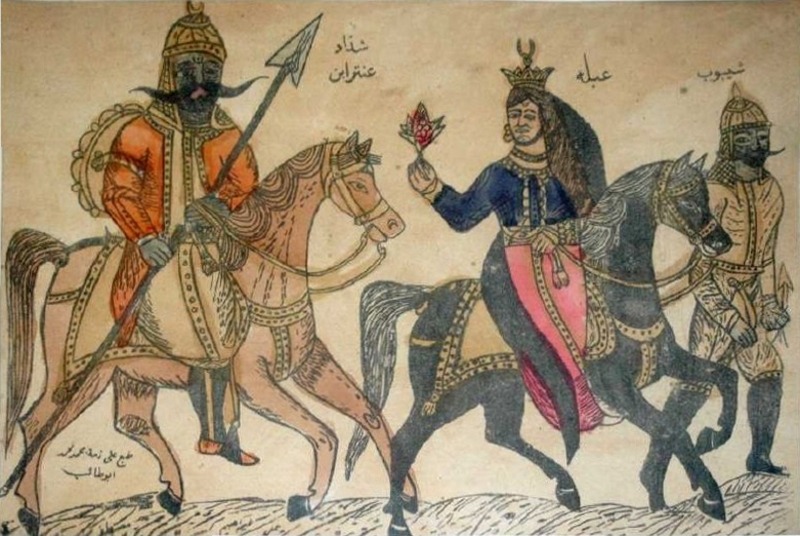
File:Antarah ibn Shaddad & Abla.jpg
Arabic literature (Arabic: الأدب العربي, al-Adab al-‘Arabī‎) is the writing produced, both prose and poetry, by writers in the Arabic language. The Arabic word used for literature is adab which is derived from a meaning of etiquette, and implies politeness, culture and enrichment.

Arabic literature emerged in the 6th century with only fragments of the written language appearing before then. It was the Qur'an in the 7th century which would have the greatest lasting effect on Arabic culture and its literature. Arabic literature flourished during the Islamic Golden Age, but has remained vibrant to the present day, with poets and prose-writers across the Arab world achieving increasing success.

Arab Poetry

A large proportion of Arabic literature before the 20th century is in the form of poetry, and even prose from this period is either filled with snippets of poetry or is in the form of saj or rhymed prose. The themes of the poetry range from high-flown hymns of praise to bitter personal attacks and from religious and mystical ideas to poems on sex and wine. An important feature of the poetry which would be applied to all of the literature was the idea that it must be pleasing to the ear. The poetry and much of the prose was written with the design that it would be spoken aloud and great care was taken to make all writing as mellifluous as possible. Indeed saj originally meant the cooing of a dove.

Non- Fiction Liteature


Fiction Literature

-In the Arab world, there was a great distinction between al-fusha (quality language) and al-ammiyyah (language of the common people). Not many writers would write works in this al-ammiyyah or common language and it was felt that literature had to be improving, educational and with purpose rather than just entertainment. This did not stop the common role of the hakawati or story-teller who would retell the entertaining parts of more educational works or one of the many Arabic fables or folk-tales, which were often not written down in many cases. Nevertheless, some of the earliest novels, including the first philosophical 
novels, were written by Arabic authors.


_______________________________________________________

A Wild Cat

Su'ad As-Sabah
Your love lurks in my veins like a bandit
Commits arson, shatters lanterns
And skulks in the corners of my veins
Like a wild cat with sharp claws
Alert to hunt moths
To pounce on birds
And I lie awake at night waiting for it to come forth
From my blood.
You came with your conquering army, and caused an upheaval
That changed my life
You sequestered all my possessions
Bound me with chains of gold
And put me under house arrest
Within the limits of your eyes
You locked me in the cell of love
And took the keys away with you. 


Suad Muhammad al-Sabah (also spelled Souad alSabah or Suʿad al-Sabah) was born in 1942 in Kuwait as a member of the ruling family. She graduated from the Faculty of Economics and Political Sciences at Cairo University in 1973. She obtained a doctorate in economics from Sari Guilford University in the United Kingdom in 1981. She later returned to Kuwait and established the Suad alSabah Publishing and Distribution House. She has published several books of poetry and established a literary prize that carries her name. She also has written hundreds of economic and political essays as well as popular articles in several Arabic local and international newspapers and magazines. Her poetry has been translated into many languages, including English.

Upon the 1990 Iraqi invasion of Kuwait, alSabah campaigned against the war, writing newspaper articles and hosting radio programs, attempting to persuade Arab organizations to adopt firm stands against Iraq's aggression. In 1991 she published an anthology of ironic and bitter poetry on the Gulf War entitled Will You Let Me Love My Country? The poems delve into the spiritual crisis experienced by most Arab intellectuals in the new world order.

Al-Sabah is the director of Kuwait Stock Exchange and a member of the Higher Council for Education, the executive committee of the World Muslim Women Organization for South East Asia, and the board of trustees and the executive committee of the Arab Intellect Forum. She is also a founding member of the Arab Cultural Establishment, the executive committee of the Arab Human Rights Organization, and the Arab Council for Childhood and Development. Her poetry has captured the attention of popular artists as well as university researchers in many countries. Her literary publications include Wamdatt Bakira (Early blinks) and Lahathat min Umri (Moments of my life, 1961). Her scientific works in English include Development Planning in an Oil Economy and the Role of the Woman (1983) and Kuwait: Anatomy of a Crisis Economy (1984).

Assessment:
1. What is Epic Literature in Arabic Literature?
2. Give one example of Murder Mystery
3. What is Arabic Poetry?

Indian Literature

Saturday, March 12, 2011


Module no. 3: Indian Literature
Posted by: Beverly Abelon
Sorces: http://www.indianetzone.com/2/history_indian_literature.htmhttp://en.wikipedia.org/wiki/Indian_literature
________________________________________________


Indian literature


-is generally acknowledged as one of the oldest in the world. India has 22 officially recognized languages, and a huge variety of literature has been produced in these languages over the years. In Indian literature, oral and written forms are both important. Hindu literary traditions dominate a large part of Indian culture. Apart from the Vedas which are a sacred form of knowledge, there are other works such as the Hindu epics Ramayana and Mahabharata, treatises such as Vaastu Shastra in architecture and town planning, and Arthashastra in political science. Devotional Hindu drama, poetry and songs span the subcontinent. Among the best known are the works of Kalidasa (writer of the famed Sanskrit play Recognition of Shakuntala) and Tulsidas (who wrote an epic Hindi poem based on the Ramayana, called Raamcharitmaanas). Tamil poetry of the Sangam poetry which dates back to 1st century BCE is well renowned. Muslim literary traditions also dominate a large part of Indian culture. In the medieval period, during which time India was mostly under Muslim rule, Indian Muslim literature flourished, most notably in the Persian and Urdu poetry. Among contemporary Indian literature Bengali poet Rabindranath Tagore became India's first Nobel laureate. So far India's highest literary honor, the Jnanpith awards, has been conferred seven times upon Bengali writers, which is the highest for any language in India.


The earliest works of Indian literature were orally transmitted. Sanskrit literature begins with the Rig Veda a collection of sacred hymns dating to the period 1500–1200 BCE. The Sanskrit epics Ramayana and Mahabharata appeared towards the end of the first millennium BCE. Classical Sanskrit literature flourished in the first few centuries of the first millennium CE, as did the Tamil Sangam literature, and the Pāli Canon.
In the medieval period, literature in Kannada and Telugu appeared in the 9th and 11th centuries respectively.[1] Later, literature in Marathi, Bengali, various dialects of Hindi, Persian and Urdu began to appear as well. Early in the 20th century, Bengali poet Rabindranath Tagore became India's first Nobel laureate. In contemporary Indian literature, there are two major literary awards; these are the Sahitya Akademi Fellowship and the Jnanpith Award. Seven Jnanpith awards each have been awarded in Hindi and Kannada, followed by five in Bengali, four in Malayalam and three in Gujarati, Marathi and Urdu.


The Gift of India

- Sarojini Naidu


Is there ought you need that my hands withhold,
Rich gifts of raiment or grain or gold?
Lo ! I have flung to the East and the West
Priceless treasures torn from my breast,
And yielded the sons of my stricken womb
To the drum-beats of the duty, the sabers of doom.
Gathered like pearls in their alien graves
Silent they sleep by the Persian waves,
Scattered like shells on Egyptian sands,
They lie with pale brows and brave, broken hands,
they are strewn like blossoms mown down by chance
On the blood-brown meadows of Flanders and France.
Can ye measure the grief of the tears I weep
Or compass the woe of the watch I keep?
Or the pride that thrills thro' my heart's despair
And the hope that comforts the anguish of prayer?
And the far sad glorious vision I see
Of the torn red banners of victory?
when the terror and the tumult of hate shall cease
And life be refashioned on anvils of peace,
And your love shall offer memorial thanks
To the comrades who fought on the dauntless ranks,
And you honour the deeds of the dauntless ones,
Remember the blood of my martyred sons!


 Sarojini Naidu


Born: February 13, 1879
Died: March 2, 1949
Achievements: She was the first Indian woman to become the President of the Indian National Congress and the first woman to become the governor of a state in India.


Sarojini Naidu was a distinguished poet, renowned freedom fighter and one of the great orators of her time. She was famously known as Bharatiya Kokila (The Nightingale of India). Sarojini Naidu was the first Indian woman to become the President of the Indian National Congress and the first woman to become the governor of a state in India.


Sarojini Naidu was born on February 13, 1879. Her father Aghoranath Chattopadhyaya was a scientist and philosopher. He was the founder of the Nizam College, Hyderabad. Sarojini Naidu's mother Barada Sundari Devi was a poetess and used to write poetry in Bengali. Sarojini Naidu was the eldest among the eight siblings. One of her brothers Birendranath was a revolutionary and her other brother Harindranath was a poet, dramatist, and actor.


Sarojini Naidu was a brilliant student. She was proficient in Urdu, Telugu, English, Bengali, and Persian. At the age of twelve, Sarojini Naidu attained national fame when she topped the matriculation examination at Madras University. Her father wanted her to become a mathematician or scientist but Sarojini Naidu was interested in poetry. She started writing poems in English. Impressed by her poetry, Nizam of Hyderabad, gave her scholarship to study abroad. At the age of 16, she traveled to England to study first at King's College London and later at Girton College, Cambridge. There she met famous laureates of her time such as Arthur Simon and Edmond Gausse. It was Gausse who convinced Sarojini to stick to Indian themes-India's great mountains, rivers, temples, social milieu, to express her poetry. She depicted contemporary Indian life and events. Her collections "The golden threshold (1905)", "The bird of time (1912)", and "The broken wing (1912)" attracted huge Indian and English readership.


At the age of 15, she met Dr. Govindarajulu Naidu and fell in love with him. a non-brahmin, and a doctor by profession. After finishing her studies at the age of 19, she married him during the time when inter-caste marriages were not allowed. It was a revolutionary step but Sarojini's father fully supported her in her endeavour. Sarojini Naidu had a happy married life and had four children: Jayasurya, Padmaj, Randheer, and Leilamani.


In 1925, Sarojini Naidu presided over the annual session of Indian National Congress at Kanpur. Sarojini Naidu played a leading role during the Civil Disobedience Movement and was jailed along with Gandhiji and other leaders. In 1942, Sarojini Naidu was arrested during the "Quit India" movement and was jailed for 21 months with Gandhiji. She shared a very warm relationship with Gandhiji and used to call him "Mickey Mouse".


After Independence, Sarojini Naidu became the Governor of Uttar Pradesh. She was India's first woman governor. Sarojini Naidu died in office on March 2 ,1949.


Evaluation:

   Analyse the Poem originated in India in titled "The Gift of India".


Japanese Literature


Module no. 4: Japanese literature
Posted by: Beverly Abelon
Sources: http://www.newworldencyclopedia.org


_____________________________________________________


Early works of Japanese literature were heavily influenced by cultural contact with China and Chinese literature, often written in Classical Chinese. Indian literature also had an influence through the diffusion of Buddhism in Japan. Eventually, Japanese literature developed into a separate style in its own right as Japanese writers began writing their own works about Japan, although the influence of Chinese literature and Classical Chinese remained until the end of the Edo period. Since Japan reopened its ports to Western trading and diplomacy in the 19th century, Western and Eastern literature have strongly affected each other and continue to do so.

Japanese literature is one of the major literatures of the world, comparable to English literature in age and variety. From the seventh century C.E., when the earliest surviving works were written, until the present day, there has never been a period when literature was not being produced in Japan. Possibly the earliest full-length novel, The Tale of Genji was written in Japan in the early eleventh century. In addition to novels, poetry, and drama, other genres such as travelogues, personal diaries and collections of random thoughts and impressions, are prominent in Japanese literature. In addition to works in the Japanese language, Japanese writers produced a large body of writing in classical Chinese.


Japanese Literature can be divided into four main periods: ancient, classical, medieval and modern.


Rivers of Stars


Yosano Akiko


Left on the beach
Full of water
A worn out boat
Reflects the white sky --
Of early autumn.
Swifter than hail
Lighter than a feather,
A vague sorrow
Crossed my mind.
Feeling you nearby,
how could I not come
to walk beneath
this evening moon rising
over flowering fields.
It was only
the thin thread of a cloud,
almost transparent,
leading me along the way
like an ancient sacred song.
I say his poem,
propped against this frozen wall,
in the late evening,
as bitter autumn rain
continues to fall.


What I count on
is a white birch
that stands
where no human language
is ever heard.
A bird comes
delicately as a little girl
to bathe
in the shade of my tree
in an autumn puddle.
Even at nineteen,
I had come to realize
that violets fade,
spring waters soon run dry,
this life too is transient
He stood by the door,
calling through the evening
the name of my
sister who died last year
and how I pitied him!


This woman of modern ideas, a counterpart of Mary Wollstonecraft, a "bluestocking", was born near Osaka, Japan in 1868 just as the country restored the emperor to power. The times, along with the ideas, were changing rapidly and Akiko was in the center of change.


Born into a prosperous family of confectioners, she graduated from the Sakai School for Women where she was the foremost poet, evolving into a social critic. She fell in love and openly lived with Yosano Tekkan, a married man and publisher of Myojo, a publication featuring new concepts: the new 31 syllable waka poetry, as well as traditional forms. Akiko was not a woman to restrain her emotions or her voice. She openly criticized the government for entrance into the Russo-Japanese war and, with her colorful vocabulary, condemned them in her writing.
Despite much criticism, she influenced many women to become more open in their views. Akiko was the queen of Myojo the publication, using it as a platform to criticize the government and to foster social changes and rights for women. Many of her poems were unabashedly lusty.

She ultimately married Tekkan and together they had, it is said, a dozen children. In 1912 she went to Paris along with her husband and brought more ideas to plague the government. Although others were put in jail, Akiko was not touched. Akiko continued to write her views concerning politics, economics and women's rights until her death just after the beginning of World War II. Her children were all successful, including doctors and lawyers. Her son, Shigeru, was organizational head of the 1964 Olympics held in Tokyo.


Ancient Literature (until 894)

Before the introduction of kanji from China, there was no writing system in Japan. At first, Chinese characters were used in Japanese syntactical formats, and the literary language was classical Chinese; resulting in sentences that looked like Chinese but were phonetically read as Japanese. Chinese characters were used, not for their meanings, but because they had a phonetic sound which resembled a Japanese word. Modification of the normal usage of Chinese characters to accommodate Japanese names and expressions is already evident in the oldest known inscription, on a sword dating from about 440 C.E.. The use of Chinese characters initiated a centuries-long association of literary composition with the art of calligraphy.

Chinese characters were later adapted to write Japanese speech, creating what is known as the man'yōgana, the earliest form of kana, or syllabic writing. The earliest works were created in the Nara Period. These include Kojiki (712: a work recording Japanese mythology and legendary history, Nihonshoki (720; a chronicle with a slightly more solid foundation in historical records than Kojiki, and Man'yōshū (Ten Thousand Leaves, 759); an anthology of poetry. More than 120 songs in the Kojiki and Nihonshoki were written in phonetic transcription, and parts of the Kojiki contain a mixture of Chinese characters used to represent their Chinese meanings, and Chinese characters used to represent a phonetic sound.

Classical Literature (894 - 1194; the Heian period)

Classical Japanese literature generally refers to literature produced during the Heian Period, what some would consider a golden era of art and literature. The Tale of Genji (early eleventh century) by Murasaki Shikibu is considered the pre-eminent masterpiece of Heian fiction and an early example of a work of fiction in the form of a novel. Other important works of this period include the Kokin Wakashū (905, waka poetry anthology) and The Pillow Book (990s), an essay about the life, loves, and pastimes of nobles in the Emperor's court written by Murasaki Shikibu's contemporary and rival, Sei Shonagon. The iroha poem, now one of two standard orderings for the Japanese syllabary, was also written during the early part of this period.

During this time, the imperial court patronized poets, many of whom were courtiers or ladies-in-waiting. Editing anthologies of poetry was a national pastime. Reflecting the aristocratic atmosphere, the poetry was elegant and sophisticated and expressed emotions in a rhetorical style.

Medieval Literature (1195 - 1600)

Medieval Japanese Literature is marked by the strong influence of Zen Buddhism, and many writers were priests, travelers, or ascetic poets. Also during this period, Japan experienced many civil wars which led to the development of a warrior class, and a widespread interest in war tales, histories, and related stories. Work from this period is notable for its insights into life and death, simple lifestyles, and redemption through killing. A representative work is The Tale of the Heike (1371), an epic account of the struggle between the Minamoto and Taira clans for control of Japan at the end of the twelfth century. Other important tales of the period include Kamo no Chōmei's Hōjōki (1212) and Yoshida Kenko's Tsurezuregusa (1331).

Other notable genres in this period were renga, or linked verse, and Noh theater. Both were rapidly developed in the middle of the fourteenth century, during the early Muromachi period.


Modern Themes

Although modern Japanese writers covered a wide variety of subjects, one particularly Japanese approach stressed their subjects' inner lives, widening the earlier novel's preoccupation with the narrator's consciousness. In Japanese fiction, plot development and action have often been of secondary interest to emotional issues. In keeping with the general trend toward reaffirming national characteristics, many old themes re-emerged in modern literature, and some authors turned consciously to the past. Strikingly, Buddhist attitudes about the importance of knowing oneself and the poignant impermanence of things formed an undercurrent of sharp social criticism of modern materialism. There was a growing emphasis on women's roles, the Japanese persona in the modern world, and the malaise of common people lost in the complexities of urban culture.

Contemporary Literature

Popular fiction, non-fiction, and children's literature all flourished in urban Japan during the 1980s. Many popular works fell between "pure literature" and pulp novels, including all sorts of historical serials, information-packed docudramas, science fiction, mysteries, detective fiction, business stories, war journals, and animal stories. Non-fiction covered everything from crime to politics. Although factual journalism predominated, many of these works were interpretive, reflecting a high degree of individualism. Children's works re-emerged in the 1950s, and the newer entrants into this field, many of them younger women, brought new vitality to it in the 1980s.

Manga (comic books) have penetrated almost every sector of the popular market. They include virtually every field of human interest, such as a multi volume high-school history of Japan and, for the adult market, a manga introduction to economics, and pornography. At the end of the 1980s, manga represented between twenty and thirty percent of total annual publications in Japan, representing sales of some four hundred billion yen annually. In contemporary Japan, there is a debate over whether the rise in popular forms of entertainment such as manga and anime has caused a decline in the quality of literature in Japan.

Asian Literature: Singaporean Literature

Module No. 1

Asian Literature: CHINESE LITERATURE

Friday, March 11, 2011

Module No. 2